Lists of Coach Companies
Geissel and Sons
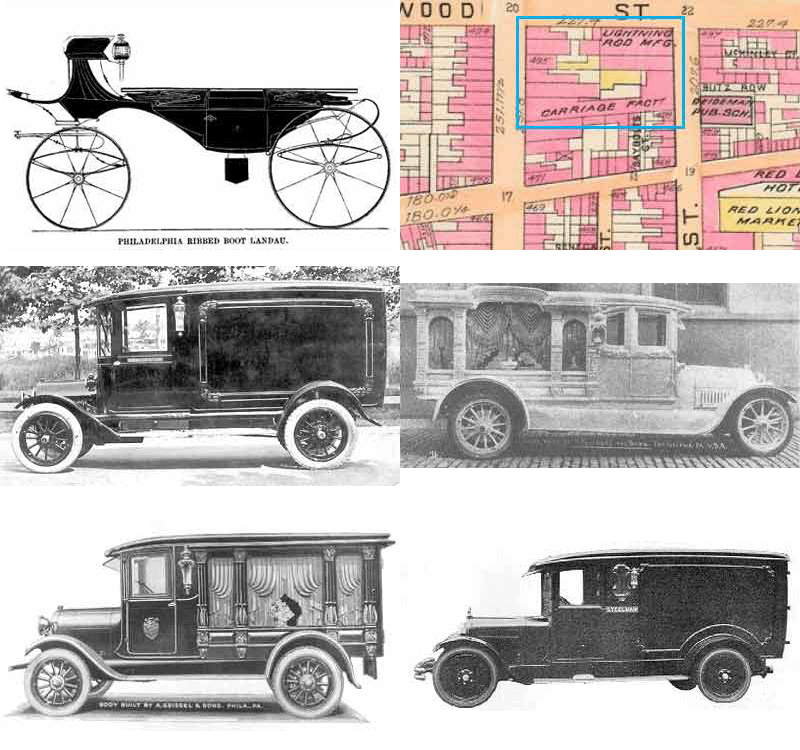
Petry, Geisell, Bayha 1864-1865; Petry, Geisell, Bayha & Co., 1866-1877; Geissel & Bayha 1877-1891; A. Geissel & Sons - 1891-1970s - Philadelphia, Pennsylvania & 1970s-1983, Colmar, Pennsylvania; King Limousine & Transportation Service 1983-present Warminster, King of Prussia, Pennsylvania
In 1915 and 1916 Geissel built on Buick and Cadillac chassis but would also place their bodies on customer-supplied chassis for $1200, about half of what a Geissel-Buick coach cost at the time. For 1917 they advertised an invalid coach which was just a new term for an ambulance. Their combination casket-wagon/invalid coach included roll-up white blinds in addition the traditional funereal draperies.
For 1918 Geissel produced a direct descendent of the Landau hearse on a 43hp twin-six Packard chassis with a wheelbase of 136". This all-black limousine-style funeral coach had blanked-out rear quarter windows and plain black blinds on inside its rear doors. Geissel also produced a stunning European-style eight-column hearse with huge glass windows in place of the normal carved-wood panels.
A 1919 advertisement stated that Geissel had "Over a half-century of Specialization in Building Funeral Equipment" and featured a raised-center 8-column class-sided hearse with heavy features that looked like a gothic mausoleum on wheels. They also offered a more conservative 8-column casket wagon on a White chassis whose carved panels emulated the increasingly popular ray-patterned draperies.
In 1921 Geissel built a custom gothic coach, the likes of which would never be seen again. Built for Philadelphia undertaker Charles J. Cristinzio, this coach featured heavy columns and intricate carvings only seen before on French and German horse-drawn hearses built for royalty. Finished in three-tone gray and built on a REO chassis, it featured a raised center chamber peaked by a two-foot-high angel on each side. Carved maidens were carved into the eight columns which held up the roof. Four shorter angels were perched at the roof's corners and intricately carved draperies were seen behind the glass panels separating the columns.
The 1922 catalog showed a Cadillac-chassised funeral coach with a blanked-out rear side window and frosted and leaded glass windows installed in the attendant's side-entry doors. The vehicle looked very-much like a taxicab or town limousine. It was finished in a dark two-tone paint scheme and featured wide whitewall tires and rear-view mirrors mounted on the front fenders.
The 1924 Geissel catalog showed a well-equipped two-tone ambulance with leaded-glass windows and running water on a Stearns-Knight chassis. Also pictured was a huge Pierce-Arrow chassised limousine-style combination coach with pull down blinds. And their 1926 advertising included a conservatively-styled limousine-style hearse on a Cadillac chassis. Throughout the mid-to-late Twenties Geissel offered a line of casket and service cars on Dodge chassis that were based on regular delivery van bodies.
Geissel stopped producing funeral vehicles in the late 1920s and turned to distribution and sales of Henney professional vehicles and later sold Miller-Meteor coaches.